
The June EduCafé focused on students' mental health and the availability of support at universities
On June 4, we hosted the summer edition of EduCafé, focusing on student mental health in the university setting.
The discussion, which we organized in collaboration with the Erasmus Student Network, focused on ways in which universities can better support students’ mental well-being, ensure the availability of support services, and create an environment where students feel safe. Participants included Charlotte Mathieu from the College of Europe, who shared her experience working with students and student communities, Stanislav Svačinka, who provides psychological support to students at Masaryk University, and Irena Pedro Hladečková from the University of Hradec Králové, whose perspective focused primarily on accessibility, inclusion, and the barriers faced by students with mental health or other “invisible” challenges. The discussion was moderated by Kaja Kaczkiełło from the Erasmus Student Network.

The Growing Importance of Mental Health
At the start of the discussion, it was noted that student mental health can no longer be viewed as a marginal issue in higher education. Mental well-being is linked not only to crisis intervention in cases of acute problems, but also to academic success, participation, and a sense of belonging. The speakers agreed that universities today often offer various forms of support, but the key question remains whether students are aware of these services, understand them, and actually feel comfortable enough to use them.
Charlotte Mathieu noted that in recent years, mental health has been discussed more openly than before. Students are more likely to bring up topics such as stress, anxiety, neurodiversity, or imposter syndrome, and seeking help carries less and less stigma. At the same time, however, she pointed out that greater openness does not automatically mean better access to support. Students may still feel lonely, feel that everyone else is coping with problems more easily, or not know who to turn to in a specific situation. She also mentioned the significance of cross-cultural differences, which can influence whether and how soon students seek help.
Stanislav Svačinka pointed out that stress and anxiety are among the most common topics students discuss in therapy. According to him, students often aren’t dealing with just one isolated problem, but rather a combination of academic pressure, personal worries, financial problems, and a feeling of being overwhelmed. He also emphasized that stress itself can manifest early on as persistent inner restlessness or an undefined sense of tension. It is therefore important for universities to be able to detect the first signs before a student reaches a crisis situation.
Irena Pedro Hladečková focused on the obstacles faced by students with mental health or other invisible challenges, such as those with autism spectrum disorder. She noted that these students often need to know clearly where they can find support, what type of assistance is available to them, and what happens after they reach out to a given service. Universities should therefore communicate clearly, practically, and in a timely manner, including through channels that students actually use. At the same time, however, some students, in part as a result of the COVID-19 pandemic, have experienced a decline in social skills, which also affects their mental health.
The Role of Teachers and Flexible Support Options
A key topic of discussion was the role of teachers. The speakers agreed that teachers are often the first to notice when a student is going through a difficult time, or are the ones students turn to directly. This is precisely why it is important for teachers to be better prepared to recognize warning signs, respond sensitively, and know where to refer a student. At the same time, however, it was noted that teachers cannot replace psychologists or therapists. For this reason, they need clear methodological guidance, training, and institutional support, as well as the space to protect their own boundaries so they can guard against burnout.
The next part of the discussion focused on how universities can create safer and more accessible environments in terms of the practical availability of services. Students often juggle their studies, work, and personal responsibilities, so it may not be easy for them to seek support during regular hours or through standard channels. Speakers recommended introducing more flexible forms of counseling, including online support, making contact points more transparent, and clearly showing students what forms of assistance are available to them. Charlotte Mathieu also pointed out that students should not perceive mental health support activities as yet another obligation. Workshops focused on stress management, breathing exercises, or meditation should be appropriately timed, practical, and integrated into the broader program. However, if they appear merely as another item on an already overloaded schedule, students may get the impression that this is yet another task they "must complete". Support should therefore be low-threshold, accessible, and integrated into the environment in which students spend their time.

Support for community life and well-targeted investments
The topic of community also came up repeatedly during the discussion. Mental health support does not begin with professional services. For many students, the first protective factor is the feeling that they belong somewhere, that they are not alone, and that other students are facing similar challenges. Student clubs, peer activities, informal gatherings, and community spaces can significantly help students feel more engaged and less isolated. In the context of international mobility, the discussion also touched on specific challenges faced by international students. In addition to academic pressure, they may also face challenges such as adapting to a new cultural environment, language barriers, housing issues, financial uncertainty, or separation from friends and family. Practical matters, such as access to information on funding, housing, or university services, are therefore directly linked to their mental well-being and should be available in a timely, clear, and ideally centralized manner.
The final part of the debate focused on practical steps. Speakers reiterated that universities need a systematic approach that goes beyond mere strategy or individual projects. Mental health support should involve students, faculty, counseling centers, administrative staff, and institutional leadership itself. It is also important to share examples of best practices, such as the option of anonymous online counseling, to highlight specific avenues of support, and to create an environment in which asking for help is seen as a normal and legitimate part of student life.
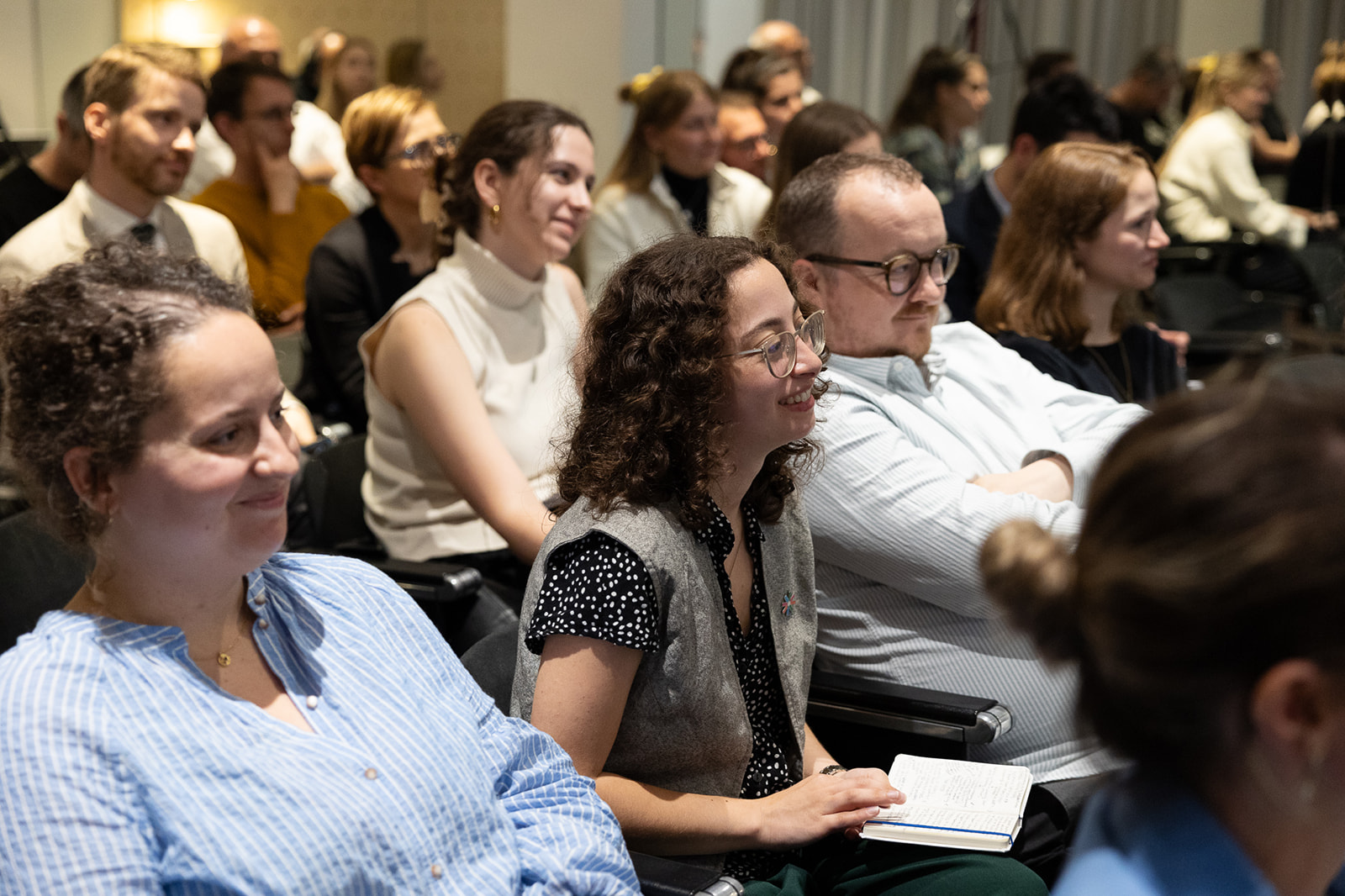
In response to the final question "what they would change if they had the opportunity to implement one major change", the speakers noted that improving the situation requires more time, better communication, and systemic support. Universities should not assume that students will automatically use services simply because they exist. According to the speakers, hope lies in students’ growing openness, the reduced stigma associated with seeking help, and the fact that mental health is becoming a common part of the debate on the quality of higher education. The debate was followed by a discussion with the audience, during which topics such as the use of artificial intelligence and its practical impacts on mental health, as well as the use of broader awareness campaigns like "Movember," were addressed.
After the debate, guests were able, as always, to continue informal conversations over light refreshments in the beautiful ISELP gallery space in the heart of Brussels.